· Celine Han, Ph.D. · Quick Take ·2 min read
ctDNA as an oncology endpoint
Takeaways from the FoCR symposium
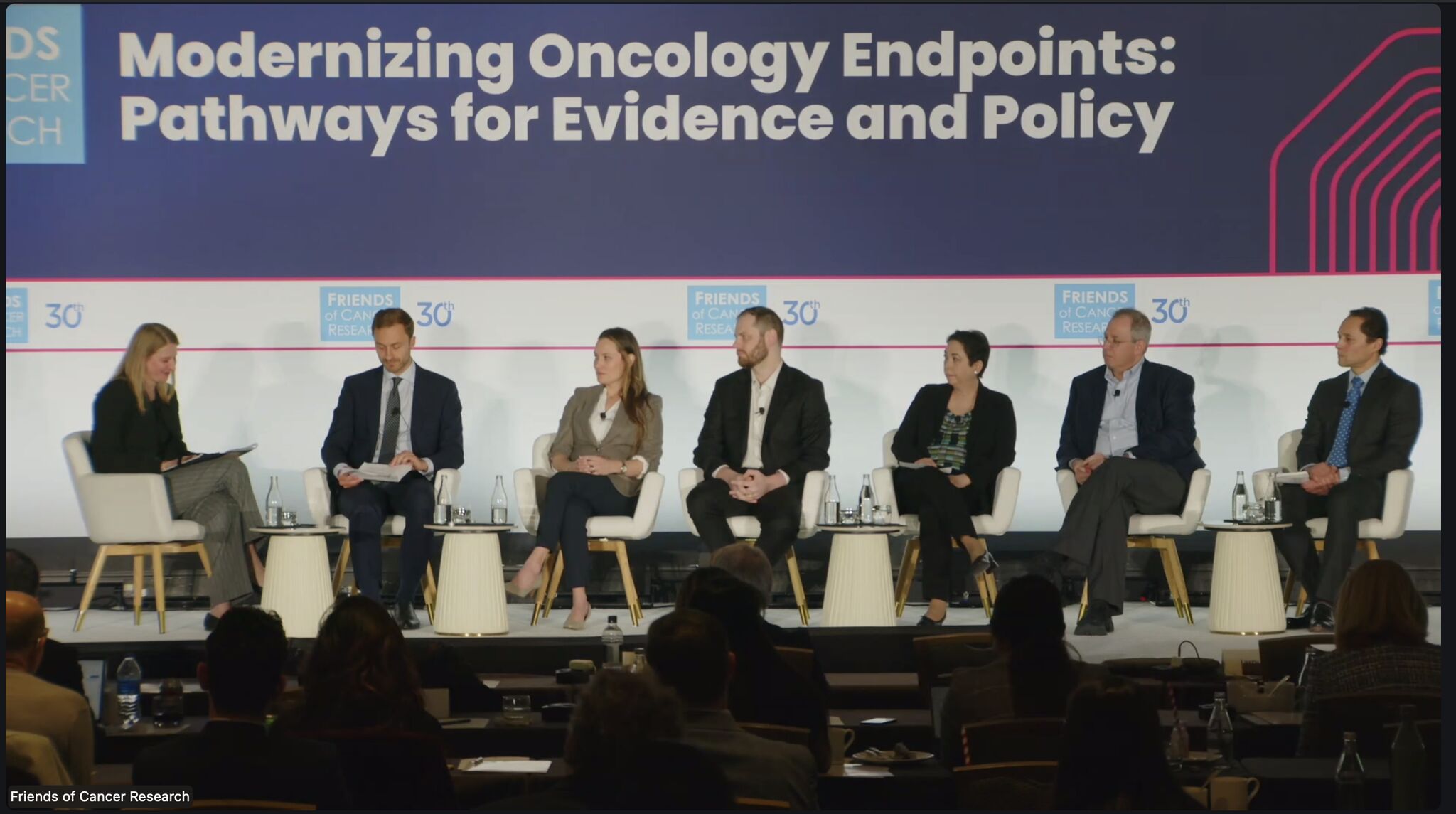
I recently attended the virtual Friends of Cancer Research (FoCR) symposium on Modernizing Oncology Endpoints, focused on circulating tumor DNA (ctDNA) and AI-enabled imaging. The discussion brought together FoCR, industry, FDA, and academia, and it was energizing to see the progress so far, plus a clear path forward.
A biomarker is a measurable biological signal that helps indicate what’s happening in the body—such as the presence of disease, how aggressive it is, or whether a treatment is working. In oncology, ctDNA (circulating tumor DNA) is especially compelling because it can be measured from a simple blood draw (non-invasive) and repeated over time, enabling longitudinal monitoring of tumor burden and molecular response without relying solely on imaging or repeated tissue biopsies. That potential is exactly why ctDNA keeps coming up in conversations about endpoints: it can capture molecular change earlier, more frequently, and often more directly than traditional approaches—if we standardize how we collect, interpret, and validate it.
Key takeaways
The ctMoniTR Project showed ctDNA’s clinical signal at scale and what’s needed next.
With 20+ sponsors pooling heterogeneous trial datasets, ctMoniTR found consistent patient-level links between ctDNA reduction/clearance and patient outcomes. The next challenge is turning these signals into trial-ready and regulator-ready endpoints, especially in early-stage MRD where ctDNA levels are lowest.
Tissue availability is becoming a limiting factor.
Tumor-informed MRD assays are often preferred, but tissue is not always accessible or usable. A practical approach is to design dual-assay strategy up front: tumor-informed when feasible, with a tumor-naive backup, plus clear decision rules and an analysis plan that handles both.
Scaling requires prospective standardization.
Define clinical landmark timepoints and sampling schedules in advance, not retroactively. Real-world data can help fill natural history gaps (lead time, kinetics), but only with careful tracking of assay versions and the treatment time period.
Looking Ahead
As ctDNA endpoints evolve, they can enable earlier interventions by detecting molecular change sooner and supporting faster decisions in both clinical trials and patient care. Teams that prioritize harmonization up front will be best positioned to move quickly and confidently.