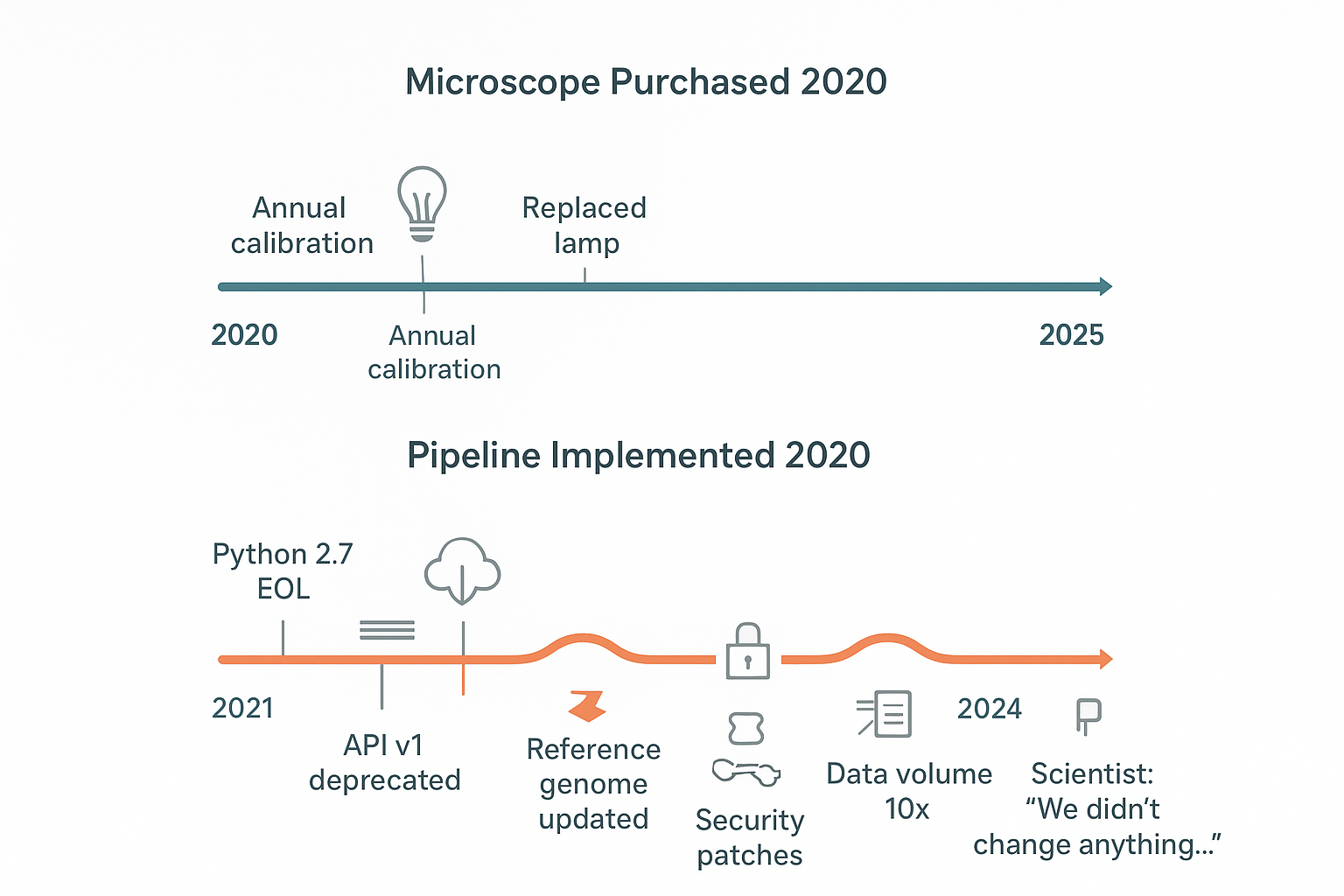
Every Quick Fix in Research Code is a Future Investment Decision

The challenge isn't eliminating quick fixes—it's being intentional about which ones you keep and how you document the journey.

The challenge isn't eliminating quick fixes—it's being intentional about which ones you keep and how you document the journey.

In biotech, the pressure to deliver results “by Friday’s meeting” often creates shortcuts that become permanent infrastructure. I’ve seen analysis scripts become production pipelines, temporary databases become data warehouses, and proof-of-concept tools become mission-critical systems.

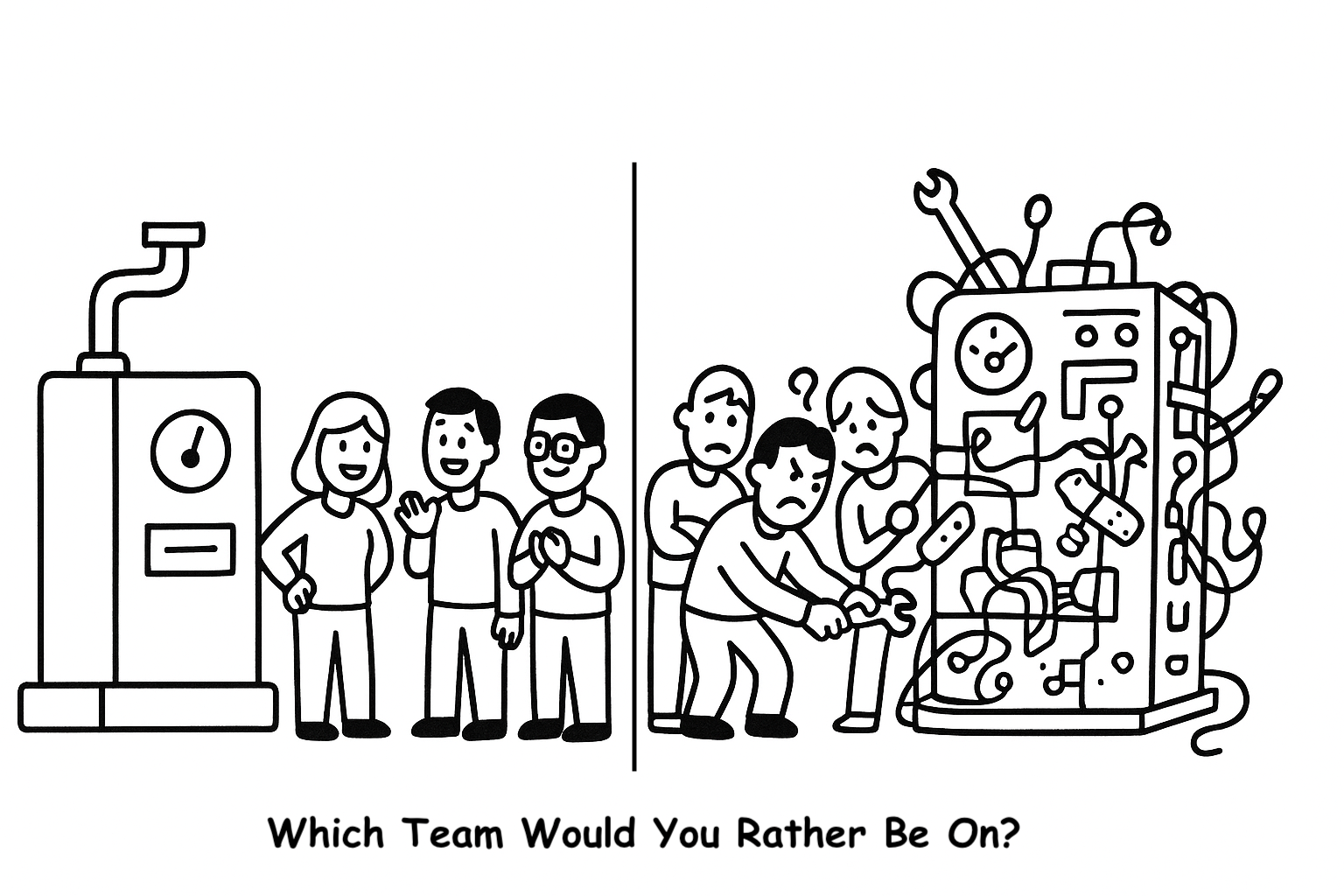
But here’s the hidden cost: each quick fix makes the system harder to teach. The more convoluted a project becomes, the more it creates knowledge silos. Suddenly, one person becomes the “go-to” for maintaining that tool, and it becomes incomprehensible to everyone else.

This isn’t just technical debt—it’s 𝗼𝗿𝗴𝗮𝗻𝗶𝘇𝗮𝘁𝗶𝗼𝗻𝗮𝗹 𝗱𝗲𝗯𝘁. You’ve accidentally created a single point of failure disguised as expertise.

The challenge isn’t eliminating quick fixes—it’s being intentional about which ones you keep and how you document the journey.
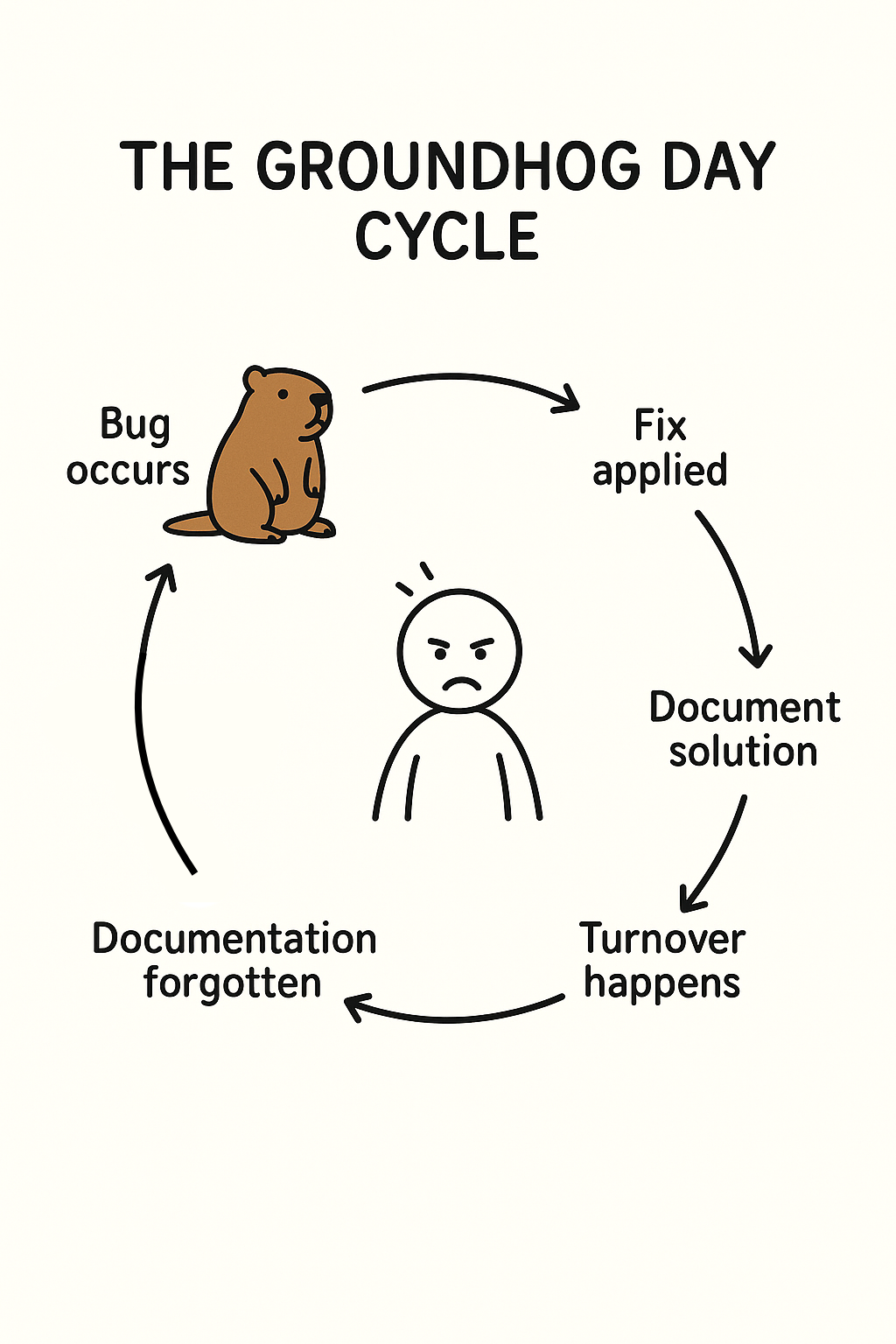
  • Document the shortcuts you take (and why)

  • Schedule regular “technical debt audits”

  • Test knowledge transfer before it becomes critical

  • Budget time for converting prototypes to production

  • Make the invisible costs visible to stakeholders

How do you balance “ship fast” with “ship sustainably” while keeping your tools teachable?

Back to Blog