· Samantha J. Klasfeld, Ph.D. · Event Reflections ·13 min read
Behind the Scenes: A Village for Women's Health
The people and lessons that made our Fall Fundraiser a success.
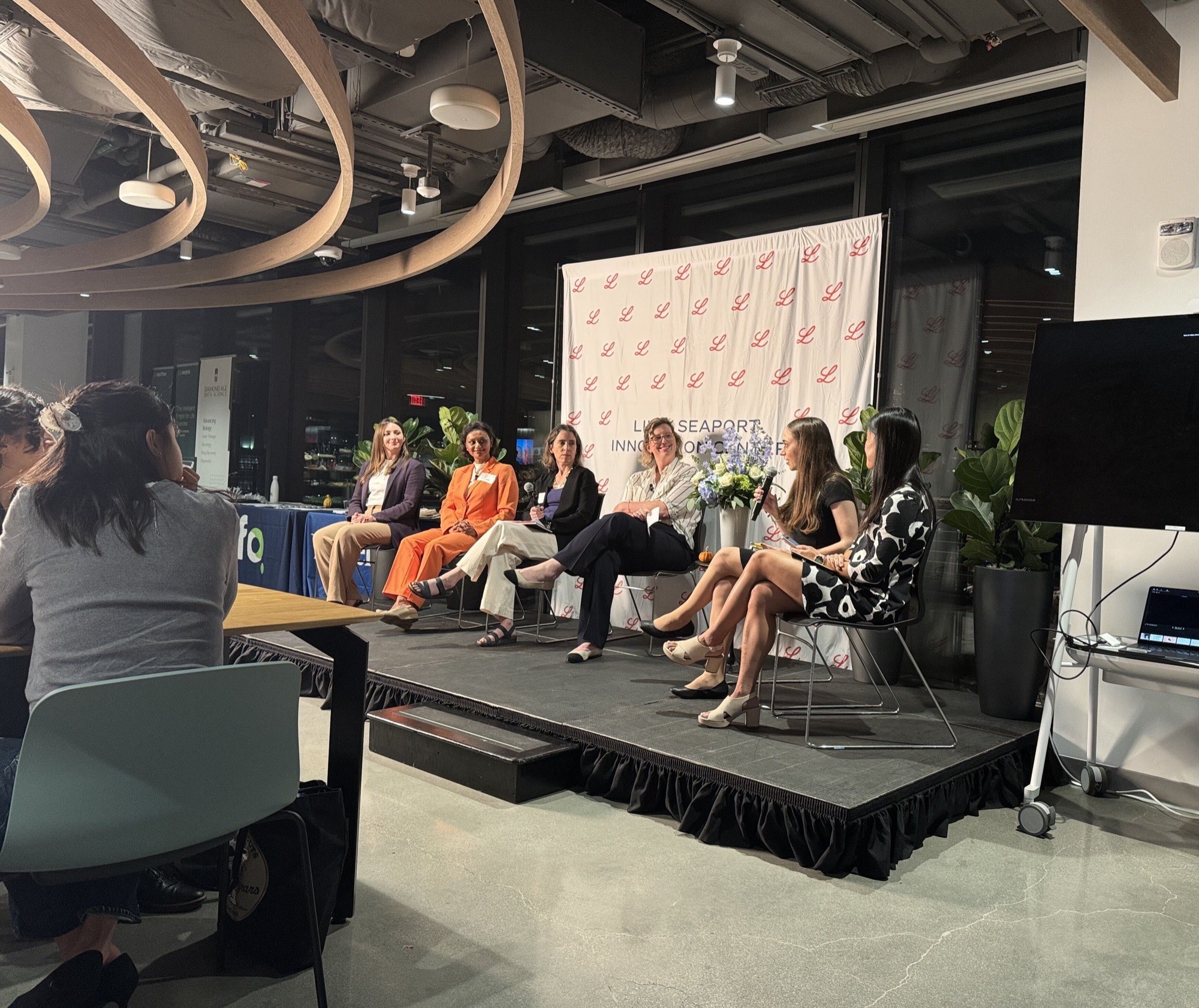
Samantha Klasfeld speaks to the panel at the 2026 Fall Fundraiser, as seen from the audience. From left to right: Ashley Abel, Ph.D., Shruthi Mahalingaiah, M.D., M.S., Sheri Simmons, Ph.D., Brandi Davis-Dusenbery, Ph.D., Samantha Klasfeld, Ph.D., and Liyang Diao, Ph.D.
Almost a year ago, I sat in a room full of brilliant people at a free data meetup. Honestly, I can’t remember the specifics. What I do remember is the frustration I felt listening to a male speaker talk about pregnancy. Being the social justice warrior I sometimes fancy myself, I started venting to the women around me about how men don’t know anything. I was basically back in elementary school. I might as well have been saying the man had cooties and we’d catch them if we got too close.
A Reading List Instead of an Echo Chamber
I’m so thankful the women of Boston are not an echo chamber. Instead of simply validating my feelings, they acknowledged them and then pointed out that I had never been pregnant and had no more expertise on the topic than the speaker, probably less. Without saying it in so many words, they suggested my anger might really be ignorance. Then they handed me a reading list: Expecting Better, Invisible Women, and Weapons of Math Destruction.
I’ve finished two of the three, and I’m still working through Weapons of Math Destruction, but I already recommend all of them. Expecting Better and Invisible Women showed me how often “standard” quietly means “designed for men.” Some of it is obvious, like the unisex t-shirt that’s really just a men’s shirt (with no room for breasts). But most of it is so woven into everyday life that we never think to question it. The line for the women’s restroom isn’t random. It’s what happens when buildings give men’s and women’s rooms the same floor space, even though women need more time (e.g., to change a tampon) and more stalls (since we don’t use urinals). Weapons of Math Destruction goes broader, into the assumptions baked into data analysis in general. Together, they’ve made me a lot more careful about asking who is missing from the data and what assumptions are being made before I decide who is wrong about it.
Why a Fundraiser
That shift in perspective followed me into my work with Boston Women in Bioinformatics’ events team, where we’ve learned that good intentions only get you so far when funding is a constant struggle. Last year, our 10th anniversary celebration was the only event that brought in revenue. It was inspiring and joyful, and it raised enough to keep us afloat through 2026, but those funds were never meant to sustain us forever. We needed a more consistent revenue stream, and as a nonprofit run entirely by volunteers, we needed one that wouldn’t burn out our team. So I proposed an annual fundraiser.
It Takes a Team
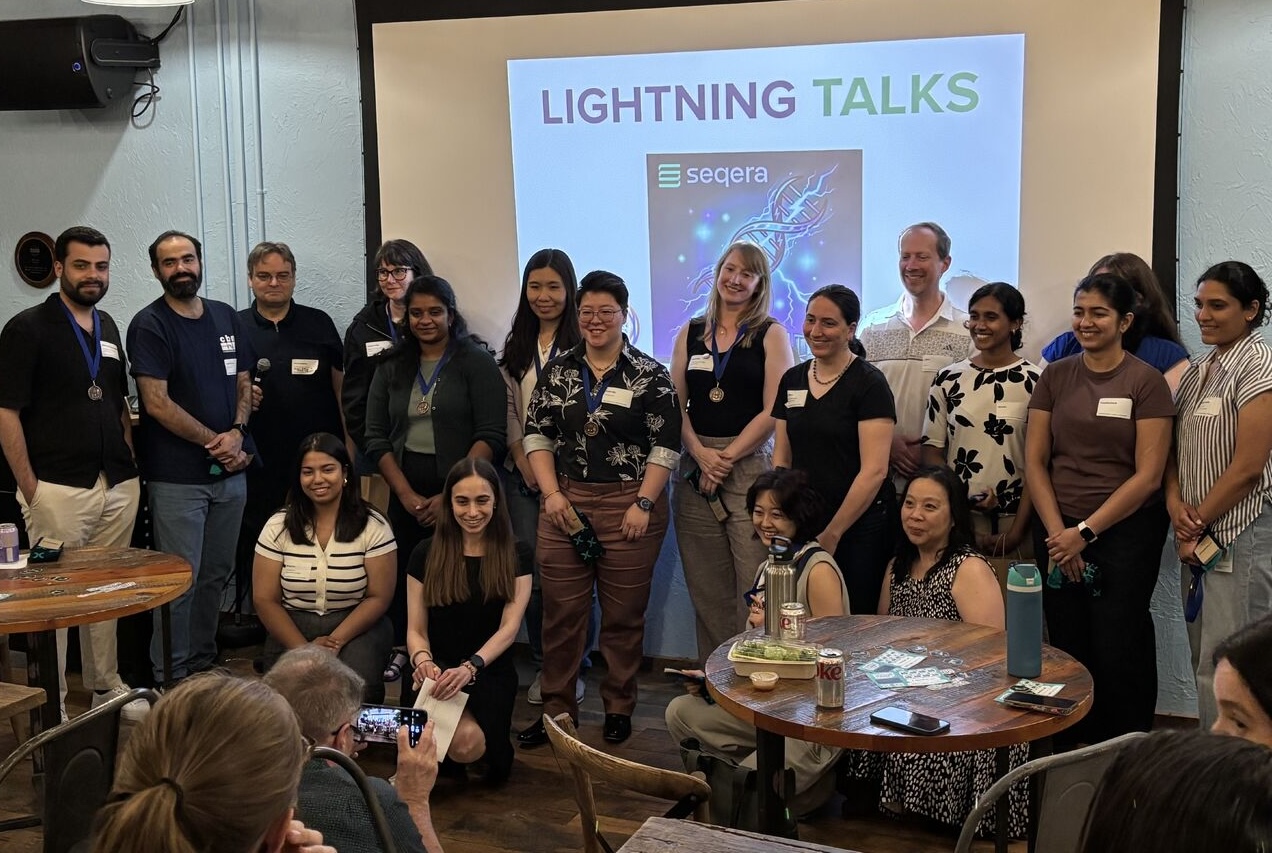
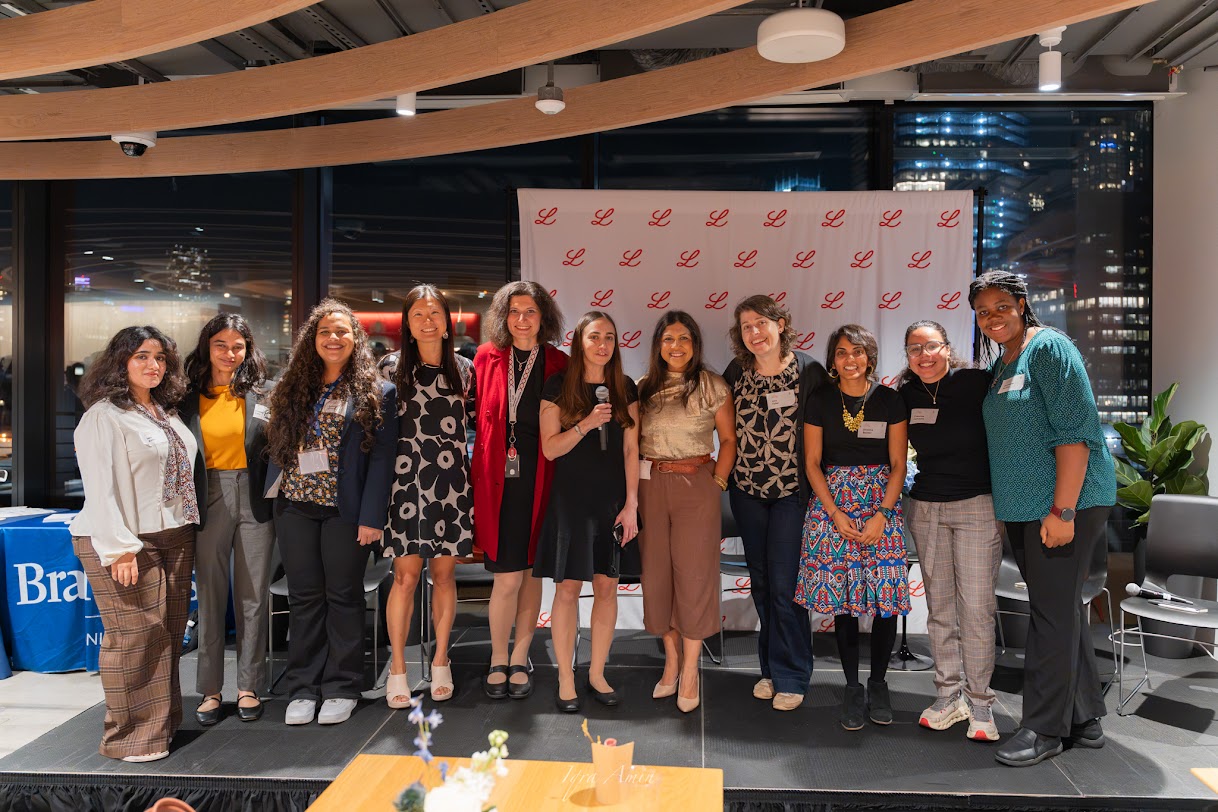
When I first proposed the fundraiser, I was the only one planning it. Then I ran the lightning talks with help from the Boston Computational Biology and Bioinformatics organizers, and I gained a new perspective on how much time and energy it takes to plan, organize, and fund an event. For the fundraiser, I polled our community on what they wanted, and they asked for a panel and a workshop. On top of that, we needed sponsors and a raffle, because, well, it’s a fundraiser. In a moment of desperation, I went to Liyang, our events co-chair, and told her we couldn’t do it. Instead of letting me pull the plug, she volunteered the entire events committee. Even then, we realized we needed more hands, so we asked the executive team to join us. We could never have done this without every one of these leaders:
- Liyang Diao, Ph.D., events co-chair, who refused to let this event die and rallied the whole organization behind it
- Yevgenia Khodor, Ph.D., president of Boston Women in Bioinformatics, whose steady hand and level head helped us overcome challenges at every step
- Emily Brodd, entrepreneur and sponsorship liaison extraordinaire, who led our sponsorship efforts and helped bring in eight sponsors
- Sakina Saif, M.S., our day-of organizer, whose attention to detail kept us all on track (and kept me from being an anxious wreck)
- Iqra Amin, who, despite recently joining the community, created nearly all of our flyers, posters, and social media graphics, and then acted as our photographer
- Diveena Becker, Ph.D., who kept the books for our largest fundraising effort to date, ran the raffle without breaking a sweat, and helped with day-of logistics
- Yaseswini Neelamraju, Ph.D., who designed our very first promotional flyer and many more after it
- Nandeeni Suryawanshi, M.S., who tag-teamed emails with potential vendors
Finding the Theme
In the middle of all of this, we still needed a theme. I knew I wanted to focus on the gender data gap, a topic that touches everything from car safety to office thermostats. Women’s health is one of its biggest pieces, but I never considered focusing on it. For crying out loud, I studied plant epigenetics for my Ph.D. As my career has become more technical, I’ve moved from working directly on science to working alongside it, so the biology of it all frankly felt out of my depth. Once again, I was pushed to learn more, and once again, I realized I was very wrong.
In July 2026, content creator Harini Bhat, Pharm.D. (@tilscience), started a series of short videos to promote an upcoming long-form video on the science of menstruation. I highly recommend her content, though watch with a critical eye, since YouTube isn’t peer-reviewed. She highlighted some exciting research happening right now that treats menstrual blood both as a tissue worth studying and as a tool for early diagnosis. She also covered studies that use sex-stratified data to compare how drugs affect women differently depending on where they are in their menstrual cycle (Today I Learned Science, 2026).
What struck me most was that these studies focused on women on their own terms, rather than measuring how women stack up against men. That completely changed how I think about women’s health data. Comparing women to men is apples and oranges. I will never be a man, so a study that tells me how I differ from one only gets me so far. But a study built around women’s biology could tell me when in my cycle a vaccine might work best, or which medications are better suited to me given the birth control I’m taking. That’s data I can actually use. I had worried the biology was out of my depth, but the biggest gaps weren’t in the biology at all. They were in how the data was collected and analyzed, and that’s squarely in my wheelhouse.
A Gap Built Into Policy
Our pull to compare women to men isn’t a coincidence. It’s a symptom of a gender data gap that was built into policy, and the story behind it reads like a blockbuster tragedy. In 1957, thalidomide was marketed to pregnant women in Germany as a sedative and a treatment for morning sickness. In 1960, it reached the FDA for approval, and the medical officer assigned to it, Frances Oldham Kelsey, Ph.D., M.D., rejected the application because its toxicity studies couldn’t rule out long-term harm. The manufacturer called her unreasonable, but she kept asking for more data. Three months later, the British Medical Journal published a letter from physician Leslie Florence reporting painful tingling in the arms and legs of patients who had taken the drug long-term (Florence, 1960). Kelsey suspected that a drug capable of damaging nerves could also harm a developing fetus, and she pressed for answers (Bren, 2001).
The FDA never approved thalidomide. In 1961, scientists linked it to severe birth defects in babies whose mothers had taken it (Lenz, 1962), and Kelsey’s caution was vindicated. Even though the US had largely been spared, the tragedy made regulators deeply protective of women and their pregnancies. In 1977, the FDA recommended that women who were pregnant or of childbearing age be excluded from Phase 1 and early Phase 2 clinical trials (FDA, 1977). The goal was to keep women from taking drugs that could harm a developing fetus. But as a result, studies focused primarily on men, and more drugs entered the market without ever being tested on women. The assumption was that results from men would simply generalize to women. In reality, we test the assumption after a drug is already on the market.
This FDA recommendation was not withdrawn until 1993 (FDA, 1993), and, until 1998, New Drug Applications (NDAs) did not require explicit reporting of sex, age, and racial subgroups (FDA, 1998). As recently as 2021, a review of thousands of COVID-19-focused clinical trials noted that sex was primarily reported in the context of recruitment, and only 4% included sex as an analytical variable (Brady et al., 2021).
With all of this in mind, framing the Fall Fundraiser was a challenge. I didn’t want to simply call it “women’s health,” because I’ve found that people often hear the phrase and subconsciously think only of reproductive health or file the topic away as a niche corner of medicine. We needed language that captured the complexity of the story and made it relevant to a room full of people who work with data. As the co-chair of communications, I took this challenge maybe a little too seriously, but thankfully I had a team that could see the vision beyond the words.
Our Sponsors
Once we had the vision, we needed the support to make it real. Our gold sponsors included two longtime partners we’re endlessly grateful for. Diamond Age, founded by longtime Boston Women in Bioinformatics member Eleanor Howe, Ph.D., has always been a champion of our community, and Seqera, which also sponsored our lightning talks, continues to be an incredible partner. Their steady support gave us the confidence to push beyond our comfort zone, and we were thrilled to welcome Zifo as our third gold sponsor. Zifo turns fragmented lab and R&D data into connected, usable data across the full drug lifecycle, which is exactly the kind of work women’s health research needs. Thank you to Eleanor Howe, Ph.D., and Martha Delaney at Diamond Age, Geraldine Van der Auwera, Ph.D., and Chris Deschenes at Seqera, and Tina Aiello at Zifo.
Our silver sponsors were just as aligned with the story. ZS, a global consulting and technology firm, connects data across complex healthcare and life sciences ecosystems, which is exactly what fragmented women’s health data needs. Benchling, a Boston company, provided my first online electronic lab notebook and is seen by many as an icon of science communication and reproducibility. Many thanks to Melissa DiTucci and Summer Frundel for their partnership.
The Speakers
I have to note up front that Yevgenia and Liyang did much of the heavy lifting in finding our speakers. That being said, I am obsessed with the lineup they helped build. Each speaker brought a distinct, essential lens, providing nuance and depth the conversation required.
Kelle Moley, M.D., of Eli Lilly opened the evening and set the stage perfectly. She spoke about the very real, physical gap in the data and the frustration of being a clinician who can’t fully help her patients because the evidence simply isn’t there.
Liyang and I then had the privilege of moderating a panel of brilliant scientists:
- Ashley Abel, Ph.D., co-founder of Metri Bio, brought insight into the science of women’s health and the research challenges created by the data gap.
- Sheri Simmons, Ph.D., an R&D executive whose career spans Johnson & Johnson, Seres Therapeutics, and Seed Health, brought the perspective of consumer health products.
- Shruthi Mahalingaiah, M.D., M.S., a physician-scientist at the Harvard T.H. Chan School of Public Health and a leader of the Apple Women’s Health Study, showed how overlooked data sources, including consumer health tech, can reveal new insights into reproductive health.
- Brandi Davis-Dusenbery, Ph.D., principal at ZS and former CSO and CEO of Seven Bridges, brought a strategic lens on connecting fragmented data across institutions to build better systems for women’s health.
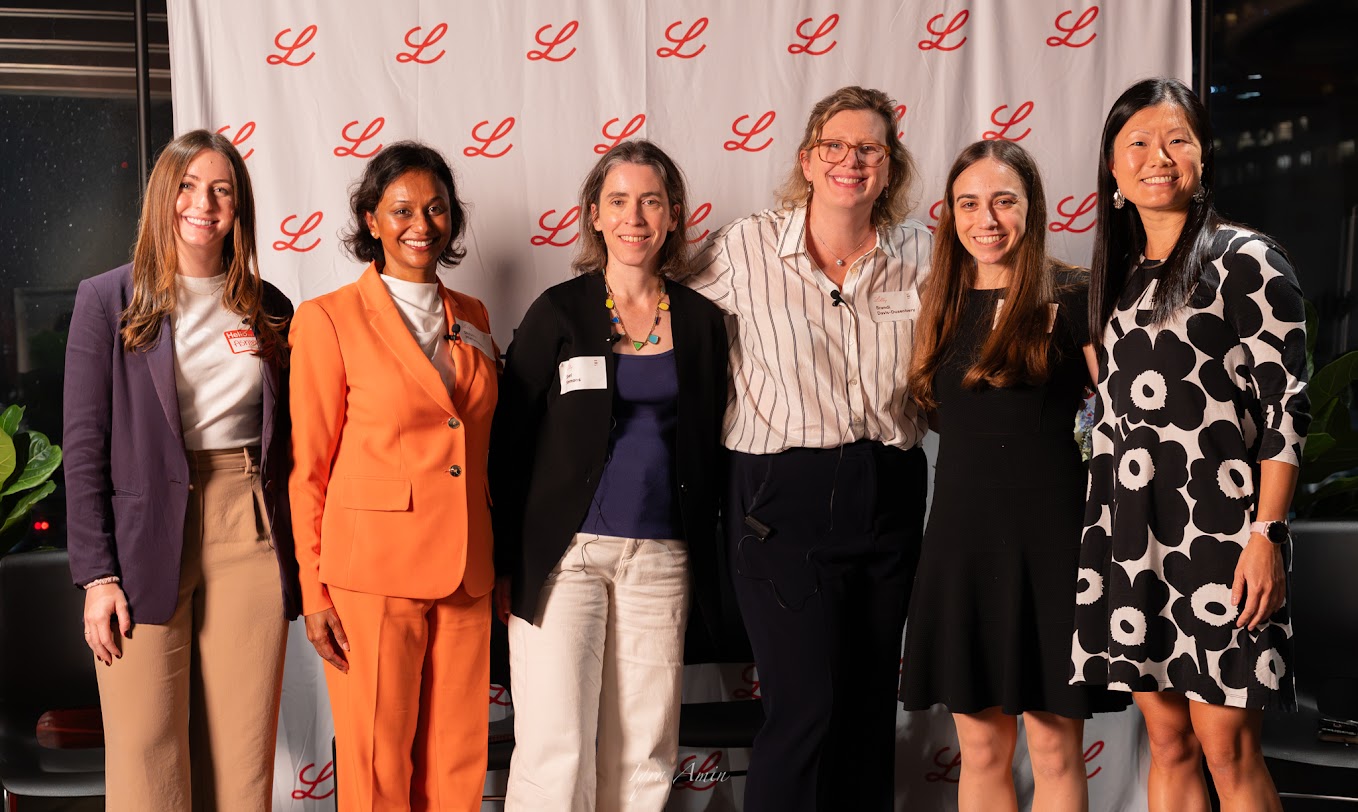
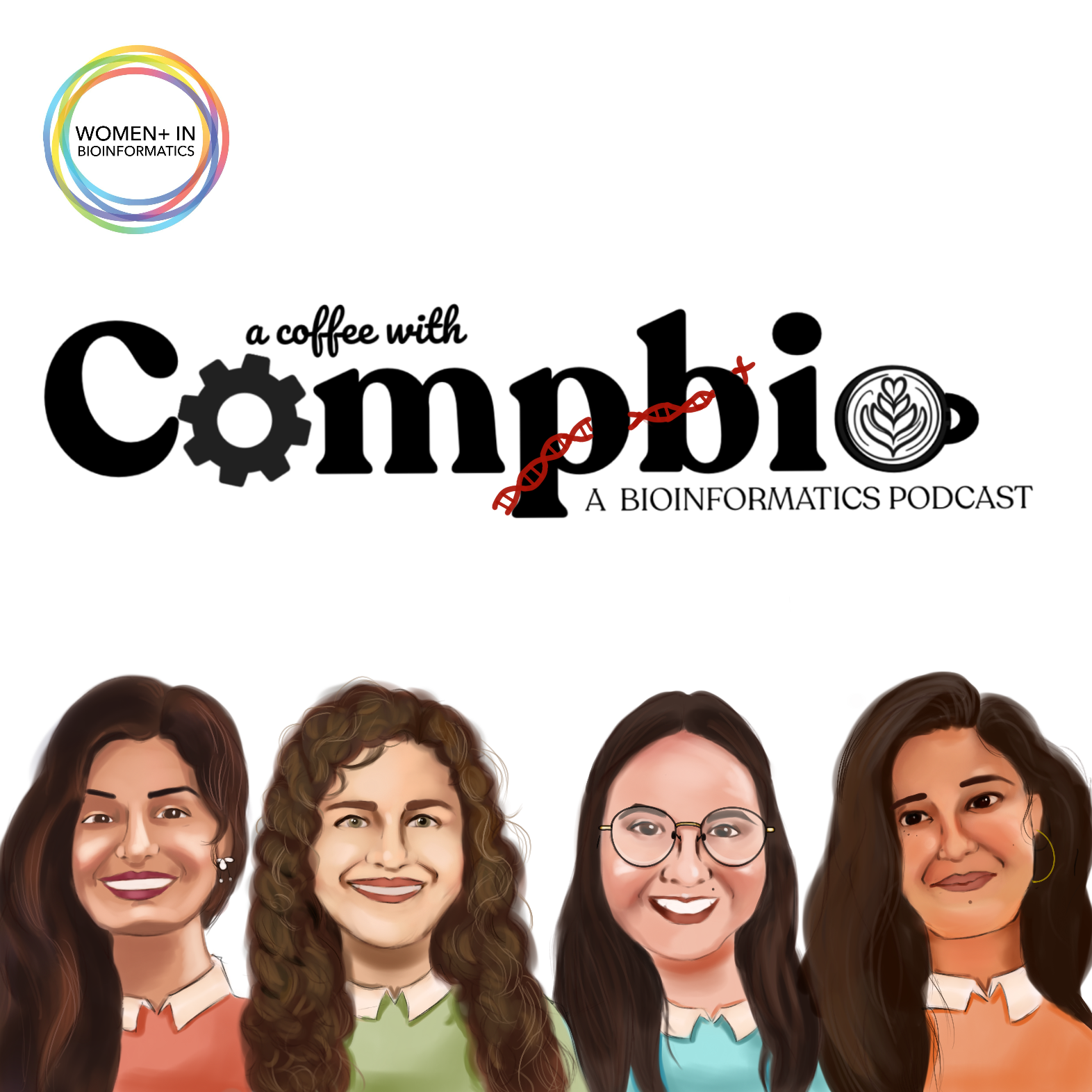
I’ll be honest: because I was on stage, the panel is mostly a blur. Luckily, Trevor Campbell recorded it for our podcast, Coffee with CompBio, and it will be on the website soon, so keep an ear out. Our conversation covers the opportunities for better data analysis, including wearables that let women track and understand their own health. The panelists also acknowledged the financial challenges. The data gap makes funding risky, and investors tend to favor studies led by men, a pattern that echoes the gender bias science faculty show in hiring (Moss-Racusin et al., 2012). Closing these gaps will take creative, targeted solutions rather than sweeping, one-size-fits-all policies. And if organizing this fundraiser taught me anything, it’s that big problems get smaller when you tackle them as a team.
It Takes a Village
Almost a year ago, I sat in a room convinced a man didn’t belong in this conversation. I was wrong, and I’m sure it won’t be the last time, but this community keeps helping me learn from my mistakes. Today, I better understand that closing the data gap for women’s health takes a village. For centuries, women’s health research has been led by men. In fact, it’s been so male-led that parts of the female body, from the fallopian tubes to Bartholin’s glands, still carry the names of the male scientists who described them. Now it’s our turn. Women in bioinformatics are ready to lead, and everyone is welcome to join us.
References
- Brady, E., Nielsen, M. W., Andersen, J. P., & Oertelt-Prigione, S. (2021). Lack of consideration of sex and gender in COVID-19 clinical studies. Nature Communications, 12(1), 4015. https://www.nature.com/articles/s41467-021-24265-8
- Bren, L. (2001). Frances Oldham Kelsey: FDA medical reviewer leaves her mark on history. FDA Consumer. https://permanent.access.gpo.gov/lps1609/www.fda.gov/fdac/features/2001/201_kelsey.html
- Florence, A. L. (1960). Is thalidomide to blame? British Medical Journal, 2(5217), 1954. https://pmc.ncbi.nlm.nih.gov/articles/PMC2098660/
- Lenz, W. (1962). Thalidomide and congenital abnormalities [Letter to the editor]. The Lancet, 1, 45.
- Moss-Racusin, C. A., Dovidio, J. F., Brescoll, V. L., Graham, M. J., & Handelsman, J. (2012). Science faculty’s subtle gender biases favor male students. Proceedings of the National Academy of Sciences, 109(41), 16474–16479. https://doi.org/10.1073/pnas.1211286109
- Today I Learned Science. (2026, July 30). Science can’t ignore it anymore [Video]. YouTube. https://www.youtube.com/watch?v=8elgnVr8yRI
- U.S. Food and Drug Administration. (1977). General considerations for the clinical evaluation of drugs. Department of Health, Education, and Welfare, Public Health Service, Food and Drug Administration. https://www.fda.gov/media/71495/download
- U.S. Food and Drug Administration. (1993). Guideline for the study and evaluation of gender differences in the clinical evaluation of drugs; notice. Federal Register, 58(139), 39406–39416.
- U.S. Food and Drug Administration. (1998). Investigational new drug applications and new drug applications. Federal Register, 63, 6854–6862.