· Lina Faller, Ph.D. · Event Reflections ·4 min read
What I Learned from Sitting in the Audience
The Vice President of Boston Women in Bioinformatics shares her perspective as an audience member at our 2026 Fall Fundraiser.
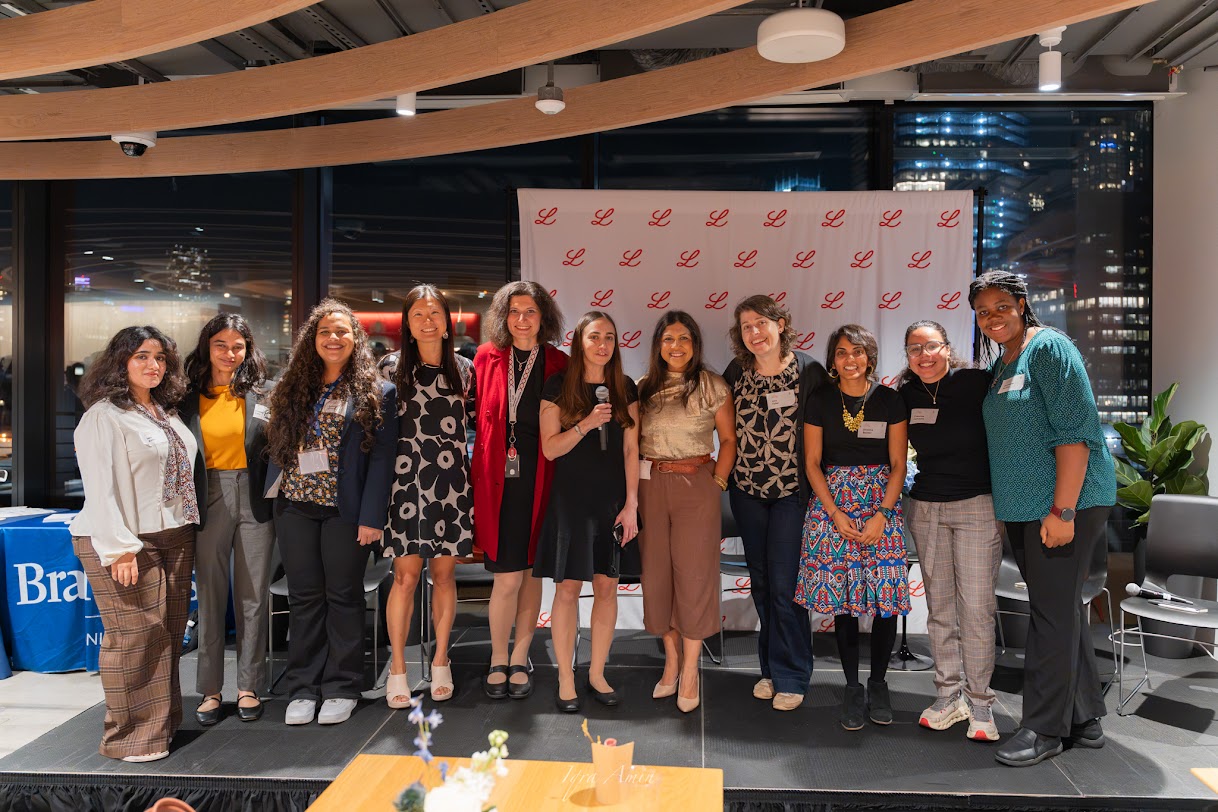
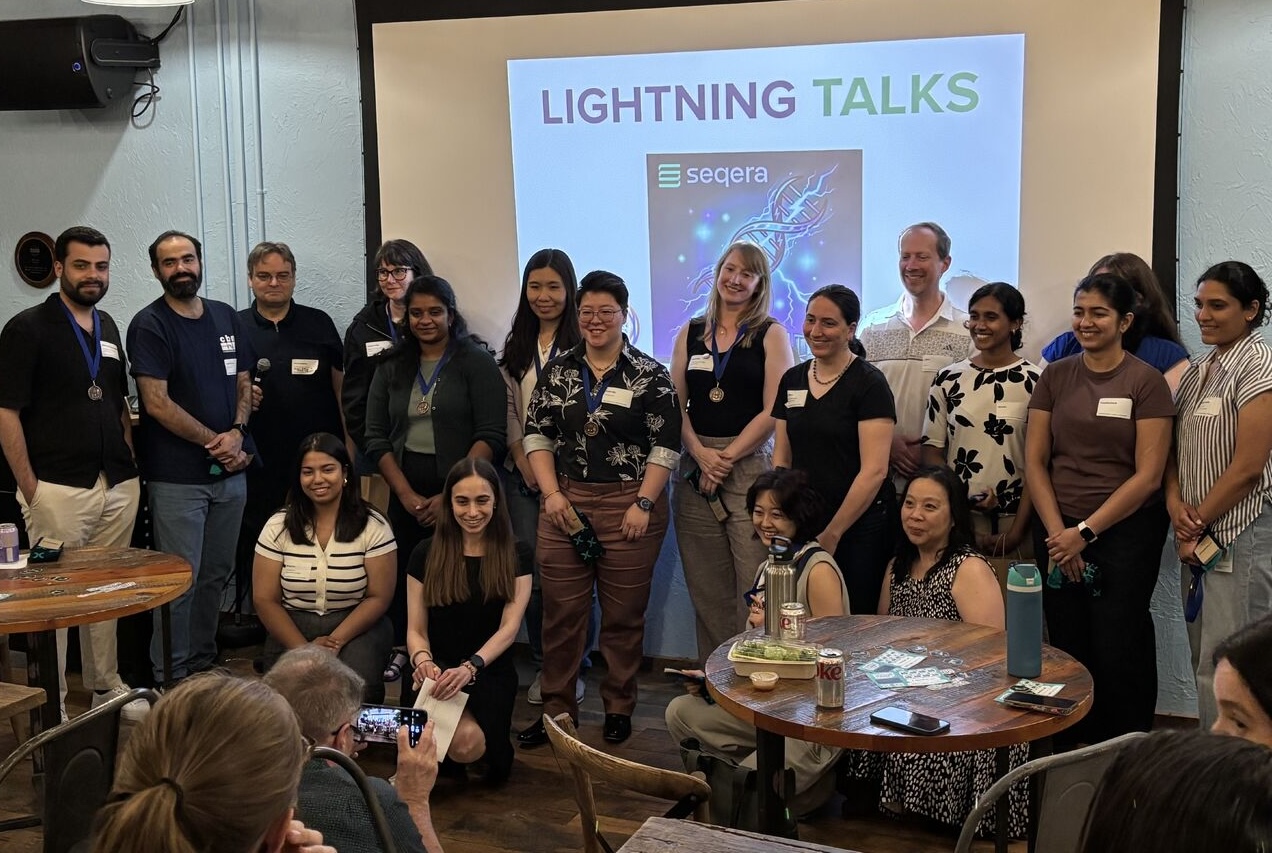
Boston Women in Bioinformatics leadership at the 2026 Fall Fundraiser. From left to right: Iqra Amin, Viveka Patil, Amulya Shastry, M.S., Liyang Diao, Ph.D., Yevgenia Khodor, Ph.D., Samantha Klasfeld, Ph.D., Sakina Saif, M.S., Lina Faller, Ph.D., Diveena Becker, Ph.D., Francine Camacho, Ph.D., and Genevieve Baddoo, M.S. Photo by Iqra Amin.
For once, I wasn’t running the event.
I’ve been part of BWIB since 2015, first as an attendee, then as an organizer, an Events Committee co-chair, and now as VP. For our Fall Fundraiser, I was explicitly not on the planning team. Samantha, Liyang, Yevgenia, Diveena, Sakina, and Emily had it covered, so I showed up ready to lean back and enjoy it. I did, and it reminded me why I keep coming back.
The Keynote
Dr. Kelle Moley of Eli Lilly opened with a story from her training as an OB-GYN. In med school, she was taught that a woman is just a small man, so if you want to medicate a woman, you simply halve the dose. It was wrong, and she knew it. As a young doctor, she found how small her toolbox felt deeply frustrating. Patients arrived every day with pain and complaints, and what she could offer was mostly birth control and non-steroidal anti-inflammatories. That frustration pushed her to move her career forward.
Behind that story is a data problem we know well. Women were excluded from clinical trials for decades. The thalidomide disaster of the late 1950s and early 60s was cited as a reason, and the result is a data gap we’re still living with. Advice like that didn’t come from nowhere: it was built on research that left half the population out.
The Panel
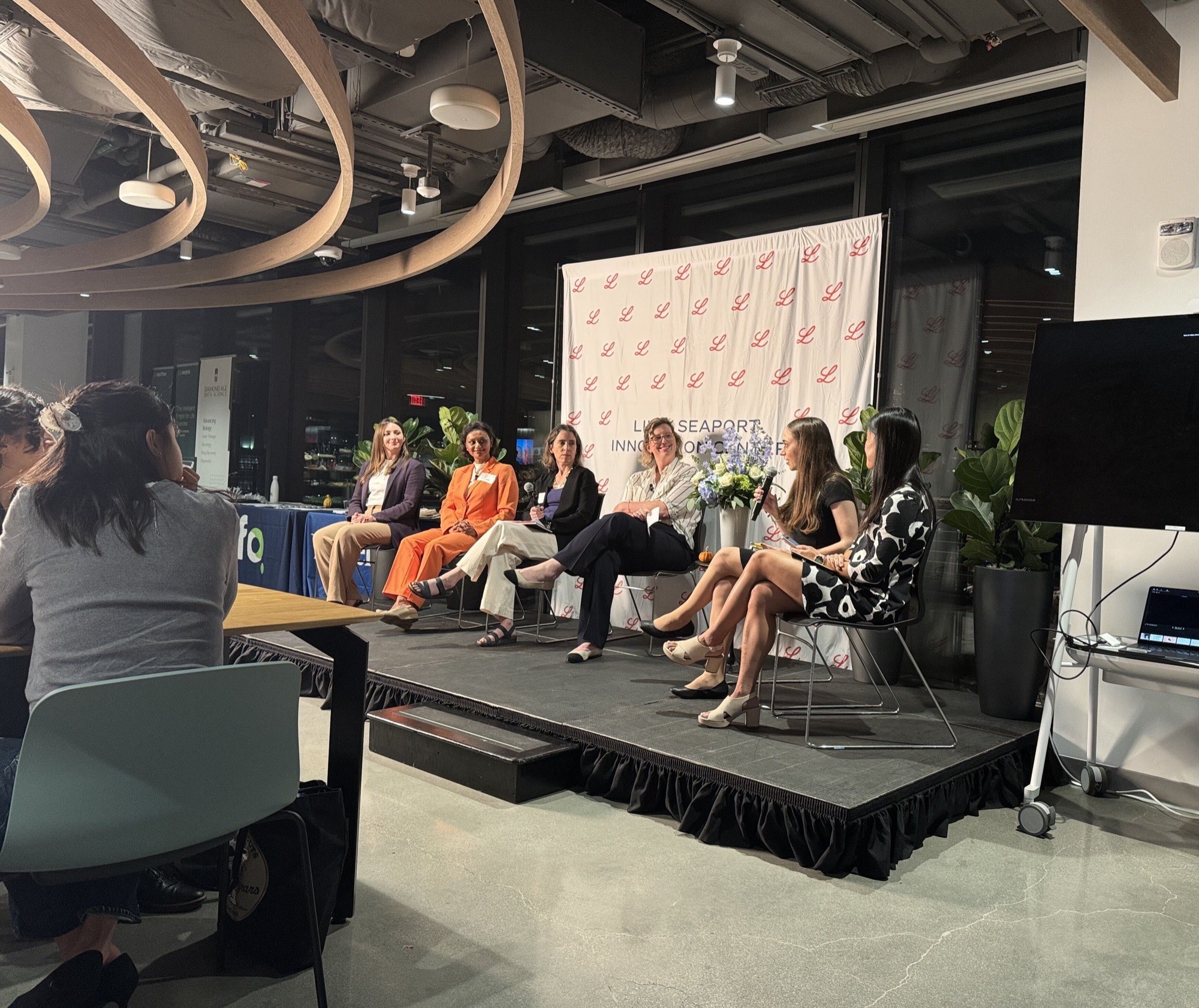
The panel brought four very different perspectives on women’s health.
- Ashley Abel, Ph.D., CEO and co-founder of Metri Bio, is developing a drug for endometriosis. Her team uses sequencing to compare the genetics of women with and without the disease, and she pointed to a family link when an audience member asked whether we could tell early who will develop it.
- Shruthi Mahalingaiah, M.D., M.S., associate professor at the Harvard T.H. Chan School of Public Health, is a principal investigator of the Apple Women’s Health Study, which follows over 100,000 participants who track their cycles and answer surveys through their iPhones.
- Sheri Simmons, Ph.D., acting CSO of MaaT Pharma and founder of KMS Bioinnovation Consulting, is a microbiome expert. She walked us through the probiotic and supplement market, where you often can’t be sure what’s in the bottle.
- Brandi Davis-Dusenbery, Ph.D., principal at ZS Associates, raised the question of how much pharmacy benefit managers shape which drugs get covered, and whether that shapes access for women.
Each of them could have carried an hour on their own.
What I Wish We’d Had Time For
Sitting in a room full of computational biologists and bioinformaticians, I kept wondering what we can do about the data gap besides name it. A few questions I took home:
- Can we close the gap, and how? Does it mean new trials, reanalyzing old data, or both?
- Can genetics shorten the road to a diagnosis? Twin studies put the heritability of endometriosis at roughly half, which was news to me. Yet diagnosis takes an average of 7 to 10 years, depending on the country and the study. There’s a clear genetic signal, but much of the heritability is still unexplained. What data would we need to turn that signal into something useful for patients?
- How do we ethically include pregnant people in clinical trials? There’s a serious ethical question there, and we barely scratched the surface.
- Is wearable and app data actionable, or just abundant? Studies like the Apple Women’s Health Study are collecting data at a scale that was never possible before. I’m curious what it can tell us, and what it can’t, about women who aren’t in the sample.
- Is coverage really skewed, or are pharmacy benefit managers a convenient scapegoat? Everyone in the system seems to point at someone else. I’d love to see the evidence.
If you work on any of this, or want to, tell us. A follow-up event, maybe a technical one, feels like a natural next step.
The People
BWIB is a small community, and I saw a lot of familiar faces that night: women I’ve worked alongside over the years and don’t get to see as often now. There was a lot of hugging. But I also thought about the flip side. For some people in the room, this may be one of the only places they’re surrounded by other women in bioinformatics, and possibly the first. I hope every newcomer felt how welcome they are.
Thank you to the organizers, speakers, sponsors, and everyone who came. If any of these questions kept you thinking too, tell us. The best BWIB events started as someone saying, “I wish we had one on this.”